


Casinos run every hour of every day without stopping. This means they need huge amounts of power to keep slot machines working, lights on, and air systems running. A typical casino uses about 15,070 kilowatt-hours of electricity each day, which is enough to power a home for months.
Energy management systems help casinos control their power use while keeping games and services running all day and night without any breaks. These systems track where energy goes and find ways to use less power without affecting your gaming experience. Smart technology lets casinos balance their need for constant power with lower energy bills.
Running a casino 24/7 creates unique problems that other businesses don’t face. You need backup systems, efficient cooling for packed gaming floors, and power for thousands of machines at once. The right energy management approach keeps everything working while cutting costs and reducing waste.
The Importance Of Energy Management In Casinos
Reliable infrastructure is one part of a larger picture, alongside the systems that manage casino momentum responsibly. Casinos face unique energy challenges that directly affect their ability to stay open around the clock and deliver the experience customers expect. Smart energy management protects operations from disruptions while controlling costs that can eat into profits.
Ensuring Continuous Game Operation
Gaming equipment requires constant, reliable power to function properly. Slot machines, electronic table games, and digital displays all depend on stable electricity flow. Any power interruption can shut down games and force the casino floor to close.
A typical casino uses about 15,070 kWh of electricity per day. This massive demand means you need backup systems and efficient distribution to prevent outages. Gaming machines must stay operational at all times, which makes energy reliability just as important as energy efficiency.
Power failures create serious problems beyond lost gaming revenue. When systems go down, you lose transaction data and potentially compromise security systems. Proper energy management includes monitoring systems that track consumption patterns and identify problems before they cause disruptions.
Impact on Customer Experience
Climate control directly affects how long customers stay on the gaming floor. Casinos maintain specific temperature and ventilation levels to keep dense crowds comfortable in spaces that operate 24/7. Poor climate control drives customers away faster than almost any other factor.
The Importance Of Energy Management In Casinos Lighting creates the atmosphere that keeps players engaged. Bright LED displays, slot machine screens, and ambient lighting all require careful power management. These systems must run continuously without flickering or dimming, which demands stable energy supply. These systems are inseparable from how casino space design maximizes comfort and play time, since lighting and climate directly affect how long players stay
Your facility’s air quality depends on high ventilation loads that constantly refresh indoor air. This becomes especially important with large crowds moving through the space at all hours. Energy management systems help balance comfort with efficiency so customers enjoy their experience while you control costs.
Operational Cost Savings
Energy represents one of the largest operating expenses for casino facilities. The amount of electricity used in 2 hours and 24 minutes of casino operation could power a fast-food restaurant for an entire day. Without proper management, these costs quickly reduce profit margins.
Modern energy management systems let you monitor consumption across different areas and equipment types. You can identify which machines or systems use the most power and find opportunities to upgrade to more efficient options. Small improvements in efficiency add up to significant savings when you operate around the clock.
Key areas for cost reduction include:
- LED lighting upgrades that use less power
- Smart HVAC systems that adjust based on occupancy
- Gaming equipment with energy-efficient components
- Automated controls that reduce waste during slower periods
These improvements lower your monthly utility bills while maintaining the same level of service that customers expect.
Core Technologies Powering Casino Energy Efficiency
Casinos rely on three main technology systems to manage their massive energy needs: smart lighting that adapts to activity levels, HVAC systems that balance comfort with efficiency, and backup power that ensures uninterrupted operations.
Smart Lighting Systems
Modern casinos use LED lighting systems paired with smart controls to cut energy use without dimming the gaming floor experience. LEDs consume up to 75% less electricity than traditional bulbs and last significantly longer.
Motion sensors and daylight harvesting systems adjust lighting levels based on occupancy and natural light availability. Gaming floors receive constant illumination, while back-of-house areas, hallways, and low-traffic zones dim automatically when empty.
Zoning technology divides casino spaces into separate lighting districts. Each zone operates independently based on its specific needs and usage patterns throughout the day and night.
Key Benefits:
- Reduced energy consumption by 40-60%
- Lower maintenance costs from longer bulb lifespans
- Instant brightness control without warm-up time
- Better light quality for gaming and entertainment areas
Optimized HVAC Solutions
Your casino’s HVAC system accounts for a major portion of total energy use. Modern systems use variable speed drives that adjust fan and compressor speeds based on real-time demand rather than running at full capacity constantly.
Smart thermostats and building automation systems monitor temperature, humidity, and occupancy across different zones. High-traffic gaming floors maintain consistent cooling, while hotel rooms, restaurants, and conference spaces receive customized climate control.
Advanced filtration systems handle cigarette smoke and high occupancy loads while maintaining air quality standards. These systems exchange air more efficiently than older models, reducing the energy needed to heat or cool fresh outside air.
Backup Power Infrastructure
Uninterruptible Power Supply (UPS) systems keep slot machines, table games, and security systems running during power fluctuations or outages. These systems switch to battery power in milliseconds, preventing any disruption to gaming operations.
Generator systems provide longer-term backup power for extended outages. Modern generators use automatic transfer switches that detect power loss and start within seconds.
Your facility’s backup power design focuses on critical loads first. Gaming equipment, security cameras, emergency lighting, and payment systems receive priority power allocation. Less essential systems like decorative lighting or some HVAC zones can temporarily shut down during emergencies to conserve fuel and battery capacity.
Strategies For 24/7 Gaming Reliability
Casinos maintain uninterrupted operations through three core approaches: continuous energy monitoring systems that track power usage in real time, automated maintenance protocols that prevent equipment failures, and load balancing methods that distribute electrical demand across multiple systems.
Real-Time Energy Monitoring
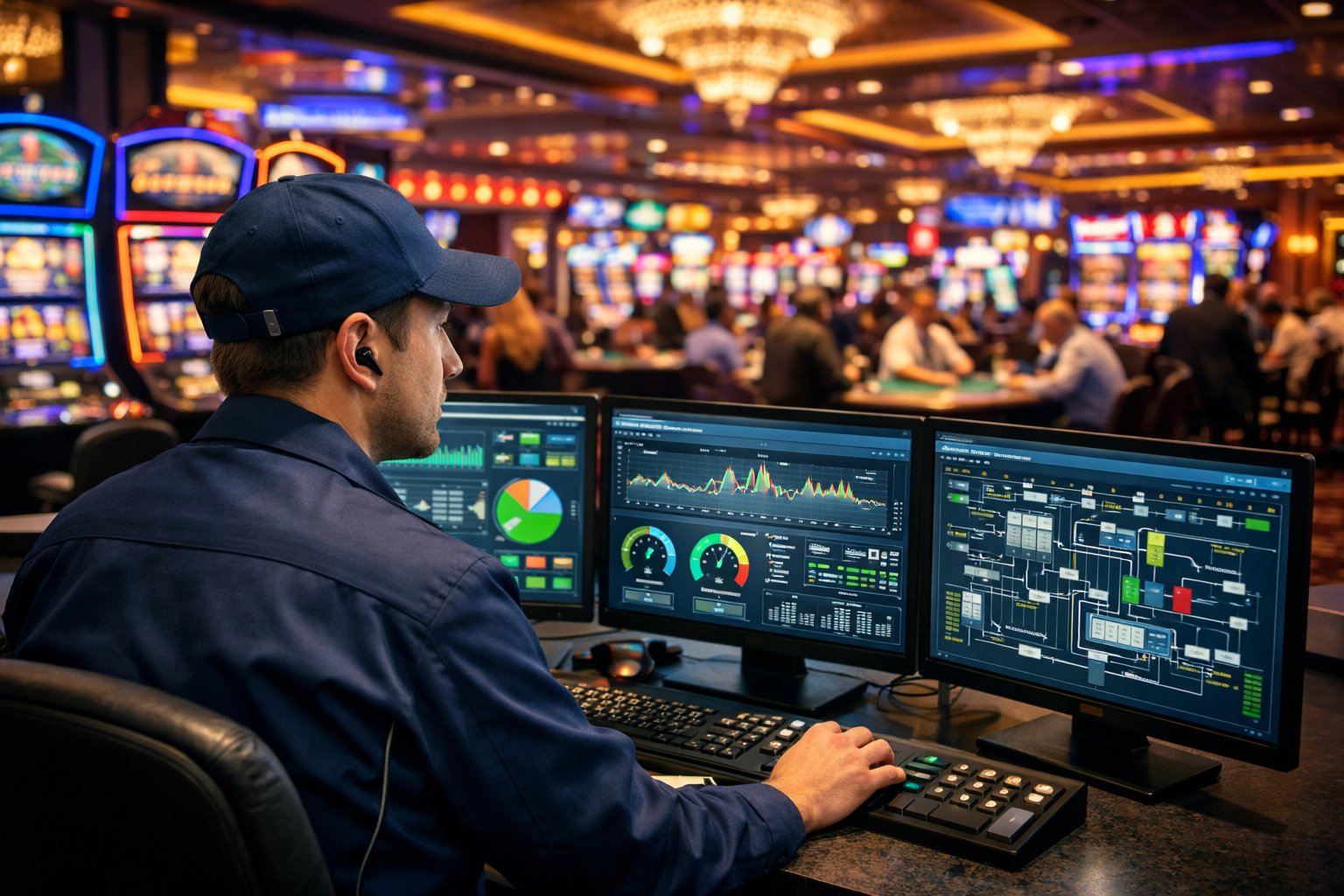
Real-time monitoring systems give you instant visibility into your casino’s energy consumption patterns. These systems track power usage across gaming floors, HVAC units, and lighting systems every few seconds.
You can identify energy spikes before they cause problems. Sensors installed throughout your facility measure voltage, current, and power quality at critical points. When readings fall outside normal ranges, the system alerts your maintenance team immediately.
Modern monitoring platforms display data on centralized dashboards. Your operators can see which slot machines draw excessive power or which HVAC zones consume more energy than expected. This information helps you make quick decisions about equipment repairs or replacements.
The data also reveals usage patterns over time. You can spot trends that indicate failing equipment or inefficient systems before they shut down during peak hours.
Automated Maintenance Scheduling
Automated systems schedule maintenance based on actual equipment performance rather than fixed time intervals. Your gaming machines and climate control systems report their operational status continuously.
The software analyzes metrics like runtime hours, temperature fluctuations, and power draw. When these indicators suggest a component needs attention, the system creates a maintenance ticket automatically. This prevents unexpected breakdowns during busy periods.
You can prioritize repairs based on equipment criticality. Slot machines on the main gaming floor receive faster service than back-office systems. The automation ensures your technicians address high-priority issues first.
Predictive maintenance reduces downtime by 30-40% compared to reactive approaches. Your equipment lasts longer because problems get fixed before they cause major damage.
Load Balancing Techniques
Load balancing distributes electrical demand across multiple power sources and circuits. Your facility operates several independent electrical systems that can share the total power requirement.
Smart controllers shift loads between circuits based on real-time demand. When one section of your casino reaches capacity, the system redirects new equipment to alternate circuits. This prevents any single circuit from becoming overloaded.
Common load balancing methods include:
- Rotating HVAC systems between primary and backup units
- Staggering equipment startup times during shift changes
- Switching between grid power and backup generators during peak rate periods
- Distributing gaming machine clusters across separate electrical panels
Your energy management system adjusts loads automatically within milliseconds. This keeps your power supply stable even when hundreds of slot machines activate simultaneously or when outdoor temperature changes force HVAC systems to work harder.
Future Trends in Casino Energy Management
Casino energy management is moving toward renewable power sources, smarter automated systems, and comprehensive environmental programs. These changes aim to cut costs while maintaining the constant power demands of gaming floors.
Integration of Renewable Energy
Solar power is becoming a major energy source for casinos. MGM Resorts installed 323,000 solar panels that now power 90% of its daytime operations in Las Vegas. This massive installation shows how large-scale renewable energy can work for buildings that never close.
You’ll see more casinos investing in solar arrays and energy storage systems. These setups let facilities generate their own power during peak sunlight hours and store excess energy for nighttime use. The technology has improved enough that casinos can rely on it without risking power interruptions to gaming equipment.
Battery storage systems are getting better and cheaper. When your casino pairs solar panels with advanced batteries, you can smooth out the gaps between energy generation and peak demand times. This combination reduces dependence on the power grid during expensive high-demand periods.
Advances in IoT and AI
Smart grids and artificial intelligence are changing how casinos monitor and control energy use. These systems track power consumption across every gaming machine, HVAC unit, and light fixture in real time.
AI-powered platforms can predict energy needs based on crowd patterns and weather conditions. If your casino expects a busy Saturday night, the system adjusts cooling and lighting in advance. During slower periods, it automatically reduces power to areas with less foot traffic.
Modern gaming machines already consume less power than older models. When you connect them to IoT networks, you gain detailed data about each machine’s energy draw. This information helps you identify equipment that wastes power and needs replacement or adjustment. This kind of real-time intelligence is made possible by the data and analytics layer inside modern online casino platforms.
Sustainability Initiatives
Casinos are setting specific environmental goals beyond just saving money. Many operators now track their carbon footprint and publish annual sustainability reports. These programs include LED lighting upgrades, high-efficiency HVAC systems, and water conservation measures.
Your sustainability efforts can include multiple building systems working together. Smart thermostats communicate with occupancy sensors to avoid cooling empty conference rooms. Lighting systems dim automatically when natural sunlight provides enough brightness.
Some casinos are pursuing green building certifications like LEED. These certifications require meeting strict standards for energy efficiency, water use, and indoor air quality. While the upfront investment is substantial, the long-term operational savings and improved public image make these programs worthwhile for many operators.



Leave a Reply